
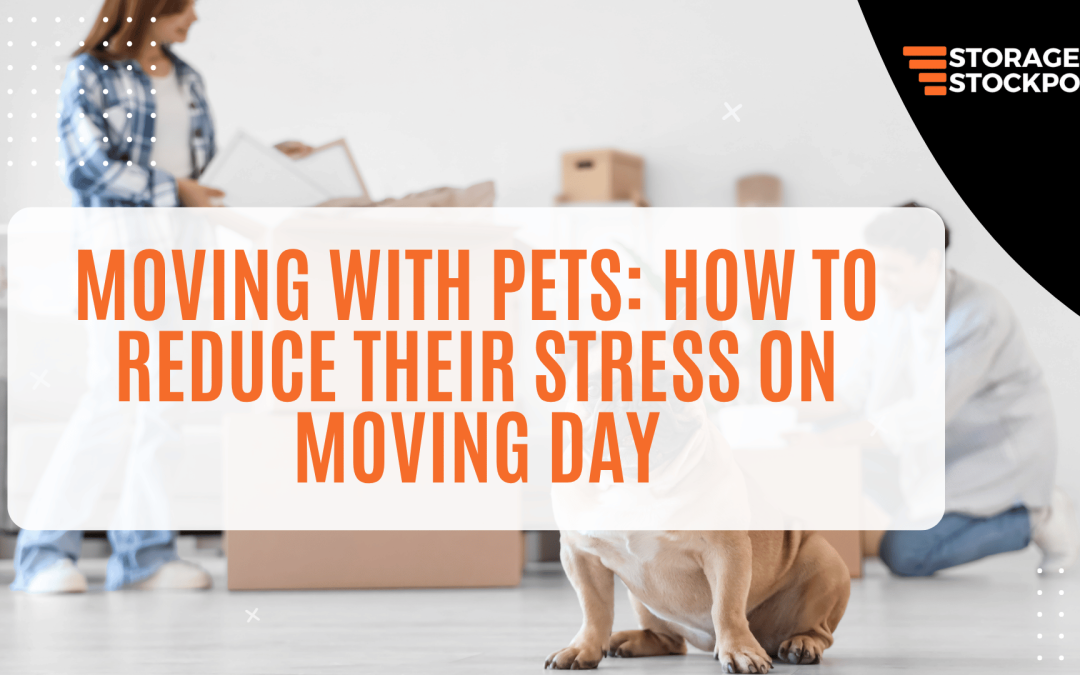
Moving house is one of the most disruptive events a pet can experience. The sudden change in routine, the unfamiliar smells, the boxes stacked in every room — animals feel all of it, and they respond in ways that can make an already hectic day even harder to manage. Understanding what your pet is going through, and planning ahead to reduce that disruption, makes a real difference to how smoothly moving day unfolds for everyone.
- Why pets find moving day stressful and what signs to look for
- How to prepare your pet in the weeks before you move
- Practical steps for keeping pets calm and safe on moving day itself
- How to help your pet settle into a new home quickly
- How storage can reduce the chaos that adds to pet anxiety
- Frequently asked questions about moving with pets
Why Moving Is Hard for Pets
Pets, particularly cats and dogs, are creatures of habit. Their sense of security is tied closely to familiar smells, sounds and spaces. When removal vans arrive, furniture disappears and the entire layout of their world changes in a matter of hours, many animals experience genuine distress. Dogs may become clingy or destructive. Cats often hide or stop eating. Even smaller animals like rabbits and guinea pigs can be badly affected by the noise and disruption of a busy move.
The signs of stress vary by species and temperament. A dog that barks constantly on moving day is not misbehaving — it is communicating that something feels very wrong. A cat that retreats under a bed in the new home may stay there for days. Recognising these responses as stress reactions, rather than bad behaviour, helps you respond with patience and practical support rather than frustration.
Moving with pets requires advance planning, not just last-minute improvisation. The more you can do in the weeks before moving day, the less traumatic the actual transition tends to be. Small steps taken early reduce the size of the shock when the big day arrives.
Preparing Your Pet Before Moving Day
Introduce change gradually
Weeks before you move, start getting your pet used to the sights and sounds associated with a house move. Bring packing boxes into the house early and let your pet investigate them at their own pace. Allow your dog or cat to sniff around moving boxes as a normal part of daily life, so by the time you start filling them, the boxes themselves are already familiar and unthreatening. Sudden, large-scale changes are far more distressing than gradual ones.
If your pet uses a crate, start leaving it out in the weeks before moving day with familiar bedding inside. For cats especially, a secure carrier that smells of home can become a genuine comfort on moving day rather than a source of panic. Spray the inside of a cat carrier with a calming pheromone product a few days in advance for best effect.
Keep routines intact for as long as possible
Dogs in particular rely on consistent feeding times, walk times and sleep routines. Do your best to maintain these in the lead-up to the move, even when your own schedule is under pressure. A dog that is walked at its usual time and fed normally will be calmer on moving day than one whose routine has already been disrupted for a fortnight. For cats, try to keep their feeding area in its usual spot until the last possible day.
Managing Moving Day Itself
Arrange a safe space or alternative care
The single most effective thing you can do when moving with pets is to remove them from the chaos entirely. If you can arrange for a trusted friend, family member or professional pet sitter to look after your animals for the day, do it. A dog at a friend’s house while the removal van is loaded and unloaded is a dog that is not bolting through an open front door, getting underfoot or becoming increasingly anxious as its world is dismantled around it.
If you cannot arrange alternative care, designate one room in your current home as a pet sanctuary. Put your pet in there early in the day with their bedding, water, food and some familiar toys. Put a note on the door asking the removal team not to enter, and keep the room closed until the van is loaded and ready to leave. This gives your pet a calm, consistent space while the activity around them peaks.
Travel safely and calmly
The journey to the new home matters. Cats should always travel in a secure, well-ventilated carrier — never loose in a car. Dogs should be restrained with a seatbelt harness or in a boot guard. Keep the car cool, offer water at rest stops and avoid feeding your pet a large meal immediately before travel if they are prone to motion sickness. Talk calmly during the journey. Your tone of voice is genuinely reassuring to a dog or cat, even if the situation itself is unfamiliar.
Use storage to reduce the chaos pets respond to
One practical strategy that many people overlook is using a storage unit to reduce the volume of activity happening in the home on moving day. If you move non-essential furniture and boxes into storage in advance, the actual moving day becomes quieter, quicker and less overwhelming — for your pet as much as for you. Fewer strangers coming and going, fewer loud noises, and a home that holds its shape for longer all contribute to a calmer environment. If you are based in Stockport or nearby in areas like Bramhall, Cheadle, Hazel Grove or Marple, you can access storage from £1 a week without committing to a long-term contract, which makes it a low-risk option for a move that may only need short-term support.
Helping Your Pet Settle into the New Home
Once you arrive, resist the urge to let your pet roam freely through every room immediately. Set up one familiar space first — the same bedding, the same food bowls in a similar layout to what they knew before. For cats, this means confining them to a single room for the first day or two and letting them explore the rest of the house gradually over several days. For dogs, a calm, structured introduction to each room, led by you, helps them understand the new space is safe.
Familiar smells are enormously powerful for animals. Bring unwashed bedding, blankets and toys from the old home. Avoid washing everything before the move, even if it feels like a fresh start for you. That slightly worn smell of home is a genuine comfort to your pet in an unfamiliar place. Give your dog or cat time and patience — most animals settle within a few weeks, though some sensitive individuals may take longer.
Keep up with routines in the new home from day one. Feed at the usual times, walk at the usual times and try to sleep in the same configuration your pet was used to. Consistency in the things you can control goes a long way towards reducing the anxiety caused by all the things that have changed.
How Storage Can Help During a House Move
A cluttered, box-filled home is a stressful environment for pets. Using a self storage unit in the weeks around your move lets you stage the process more gradually, keeping your home calmer for longer. You can move excess furniture and packed boxes out before moving day, so the chaos is spread out rather than concentrated into one overwhelming day. After the move, if your new home needs time before everything fits — perhaps a room is being redecorated or you are waiting on new furniture — storage bridges that gap without your pet having to navigate a maze of boxes for weeks on end.
Before booking any unit, it helps to think about how much space you actually need. The storage size estimator at storagestockport.com gives you a practical starting point so you are not paying for space you do not need. And if you have questions about how storage works alongside a house move, the storage FAQs page covers common queries about access, notice periods and what you can store.
Related Guides
- How no-deposit storage works and why it reduces financial risk
- Self storage prices and unit sizes in Stockport
- Storage from £1 a week: what’s included and how it works
- Estimate the right storage unit size for your move
Frequently Asked Questions
How long does it take for a pet to settle after moving house?
Most dogs adjust to a new home within two to four weeks, provided their routine stays consistent and they receive plenty of reassurance. Cats can take longer — some confident cats settle within a week, while more anxious individuals may need a month or more before they feel fully at ease. Keeping familiar bedding, feeding times and play routines intact is the most effective thing you can do to speed up the process.
Should I let my cat outside straight away in the new home?
No. Cats should be kept indoors for at least two to three weeks after a move to allow them to bond with the new property as their territory. If let out too soon, some cats will attempt to return to the old address. Once they are eating well, sleeping calmly and showing relaxed body language, it is generally safe to allow supervised outdoor access, starting with short periods.
Is it better to move pets in the car or have them travel separately?
For most domestic pets, travelling with their owner in the family car is preferable to being transported separately. Your presence is calming, and the journey is usually shorter and less stressful than going in a separate vehicle with unfamiliar people. Ensure the carrier or restraint is secure, keep the temperature comfortable, and stop for water on longer journeys.
Can using storage really make moving day easier for a pet?
Yes, in a practical sense. By moving non-essential items into storage before moving day, you reduce the volume of activity in the home — fewer trips, fewer strangers and a less chaotic environment. This is calmer for pets. It also means the move itself is quicker, reducing the window during which doors are left open and your pet’s routine is disrupted.
What if I only need storage for a few weeks during my move?
A short-term need is exactly what flexible, month-to-month storage is designed for. You are not required to commit to a minimum term, so if your move completes sooner than expected, you are not locked into paying for storage you no longer need. Check the terms carefully wherever you book, as some facilities do require minimum contract lengths or charge penalties for early exit.
Moving with pets takes more planning than moving without them, but the effort is straightforward once you know what matters most: familiar routines, a calm environment and a gradual introduction to change. If reducing the chaos around your move is part of your plan, flexible, no-deposit storage at storagestockport.com gives you a low-risk way to stage your move at a pace that works for your household — pets included.
Recent Comments