
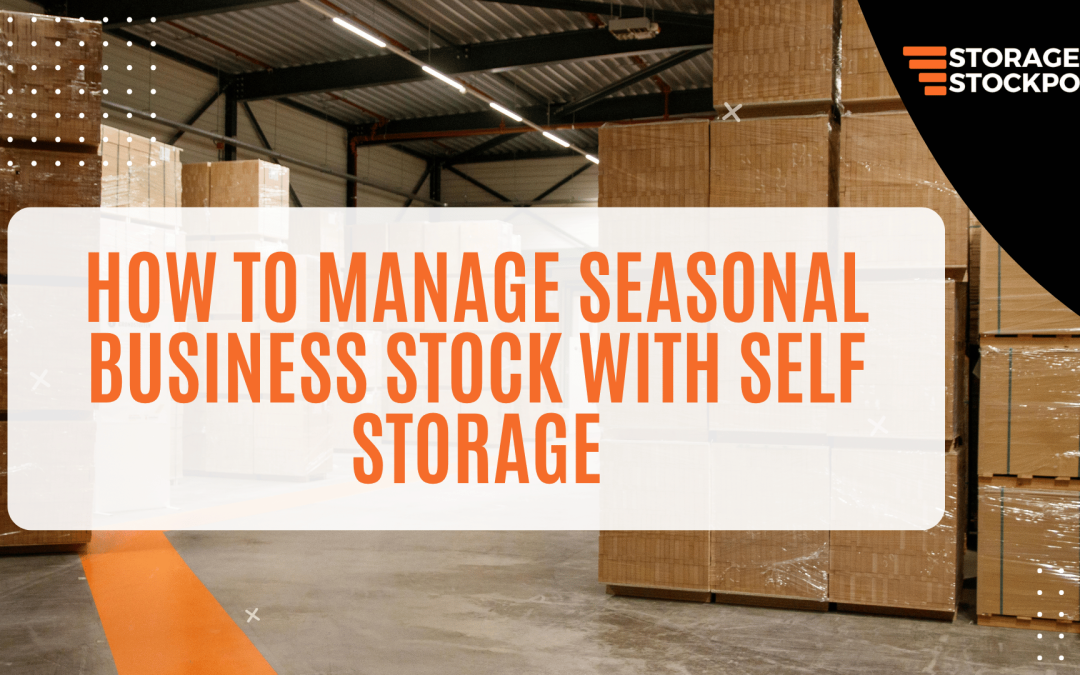
Seasonal business stock can put real pressure on your workspace long before peak trading begins. If you need a practical way to manage seasonal business stock without overcrowding your shop, office or home base, self storage can help you stay organised, protect cash flow and keep day-to-day operations running more smoothly.
For many Stockport businesses, the challenge is not only finding extra room. It is knowing when to move stock in, how to separate fast-moving lines from off-season items and how to avoid paying for more premises than you actually need.
What this guide covers
- Stock planning for peak and off-peak periods
- Storage layout for seasonal inventory
- Cash flow and space-saving benefits
- Common mistakes with peak stock management
- Practical steps for choosing the right unit
Why seasonal business stock becomes difficult to manage
Seasonal demand creates a pattern that is hard to handle with fixed space. At one point in the year, you may need room for Christmas stock, summer products, event materials or promotional packaging. A few months later, much of that inventory no longer needs to sit in your main workspace, but it still needs to be stored properly until the next sales cycle.
This is where many smaller businesses start to feel the strain. Stock ends up in corridors, spare offices, back rooms or garages that were never meant to operate as long-term storage areas. That usually affects efficiency first. Staff spend more time moving boxes, locating products and working around clutter than actually serving customers or processing orders.
Managing seasonal business stock well is really about timing and access. You need enough space to buy and hold stock at the right point in the trading cycle, but not so much permanent premises that you are paying for empty room once the busy season passes.
Common businesses affected by seasonal stock cycles
This issue affects more than just retailers. Gift businesses, online sellers, trades, event suppliers, hospitality firms and promotional product companies often deal with strong peaks and quieter periods. Even a modest increase in stock volume can become hard to handle if your base is already working near capacity.
- Retailers with Christmas, summer or back-to-school peaks
- E-commerce sellers launching seasonal product ranges
- Event and hospitality suppliers holding extra stock for busy periods
- Service firms storing promotional materials and branded items
- Trades carrying project-based or weather-driven stock increases
How self storage helps you manage seasonal business stock
Self storage works well because it gives you room without forcing a permanent property decision. Instead of expanding your main premises or trying to squeeze extra stock into the wrong parts of the business, you can create a separate space for overflow, off-season inventory and future demand. That keeps your everyday workspace clearer and more focused.
It also gives you more control over stock buying. If you know you have room to hold extra inventory safely, you may be able to order ahead with more confidence and prepare for your busiest periods without disrupting normal operations. That can be especially useful when lead times are longer or supplier prices vary during the year.
If you want to compare costs before making a decision, it helps to review current storage prices in Stockport. That gives you a more realistic view of the cost of extra space compared with the hidden cost of running your business in a cramped and inefficient way.
What should go into storage first?
The first items to move are usually the ones that are valuable but not needed every day. Off-season stock, backup packaging, display materials, archived promotional items and slower-moving lines are all common candidates. The aim is to free up space in your main working area without making core operations harder.
Fast-moving stock should stay closest to where orders are picked, packed or sold. Off-season items and future campaign stock can sit further away, ready to be brought back in when demand starts building again. That separation makes the whole stock cycle easier to manage.
Set up your unit so stock is easy to control
A storage unit is only useful if it is arranged properly. If everything goes in as mixed boxes and loose stock, the space quickly becomes another problem instead of a solution. The best setup for seasonal business stock is one that supports clear rotation, easy access and accurate stock checks.
Organise by season, category and priority
Start by grouping stock in a way that matches how you actually sell it. You may organise by season, by product range or by how quickly the stock is likely to move once it comes back into active use. The important thing is that you can see what belongs together and when it is meant to be used.
- Current peak stock near the front
- Next-season stock grouped separately
- Packaging materials in their own section
- Promotional items clearly labelled by event or season
- Older stock placed where it can be reviewed easily
Labelling matters here. Every box, shelf or pallet area should tell you what the stock is, when it is for and whether it is active, reserve or leftover inventory. That makes reordering more accurate and reduces the chance of buying stock you already have.
Leave room to work, not just to stack
It is tempting to maximise every inch of a unit, but overpacking usually makes stock harder to manage. Leave enough room for walkways, stock counts and sensible retrieval. If you cannot reach products without shifting five other boxes first, the setup is already slowing your business down.
A storage size estimator is helpful if you are not sure how much space seasonal overflow will really need. It is usually better to plan for some access room than to book a unit that only fits the stock on paper.
Use storage to protect cash flow and avoid rushed decisions
Storage does more than solve a space problem. It can also improve the way you make buying decisions. If your business has the room to take in stock before the rush starts, you are less likely to end up making last-minute purchases at higher cost or missing out on sales because you were too tight on space to prepare properly.
This matters in both peak and trough periods. During the peak, you need smooth access to stock. After the peak, you need somewhere sensible for leftover seasonal lines, fixtures, packaging and campaign materials that are still useful but not needed on the shop floor or in the office right now.
Flexible terms can help here. A no deposit storage option may suit businesses that want to act quickly without a larger upfront cost. Introductory offers such as storage from £1 a week can also be useful when you are testing the right amount of space for your stock cycle.
Think in stock cycles, not just monthly rent
Many businesses compare storage only as a weekly or monthly cost. A better way to judge it is by asking what the space helps you do. If it allows better stock planning, protects your working area and helps you avoid rushed buying or lost sales, it may be adding more value than the basic cost suggests.
That is especially true for seasonal business stock, where the pressure comes in waves rather than staying constant all year. A flexible storage setup lets you respond to those waves more calmly.
Common mistakes when handling seasonal stock
The first mistake is leaving planning too late. If you only start thinking about storage once the stock has already arrived, your best decisions have usually been missed. Boxes get put wherever they fit, the unit becomes disorganised quickly and the main workspace still ends up cluttered.
The second mistake is mixing active stock with off-season lines. That makes picking slower and can lead to buying errors because you lose track of what is meant for now and what is meant for later. A clean separation keeps stock movement more predictable.
The third mistake is failing to review leftovers properly once the busy period ends. Seasonal stock should be checked, labelled and repositioned with the next cycle in mind. Before booking, it is also worth reading the self storage FAQs so access arrangements and general rules match the way your business operates.
Related guides
- Compare storage prices for seasonal stock planning
- See flexible storage options with no deposit
- Review introductory storage offers from £1 a week
- Estimate the right unit size for overflow inventory
Frequently Asked Questions
What is the best way to store seasonal business stock?
The best approach is to separate current stock from off-season inventory and label everything clearly by season, category or campaign. That makes it easier to retrieve items when demand returns and reduces the risk of overordering.
Can self storage help with peak trading periods?
Yes, it can give you room to hold extra inventory, packaging and promotional materials before the busy period starts. That can make stock planning smoother and keep your main workspace more organised.
Should seasonal stock be kept with everyday stock?
Usually not. Mixing the two can slow down picking, create confusion and make stock counts less accurate. A separate area for off-season items is usually much easier to manage.
How much storage space do you need for seasonal inventory?
That depends on product size, stock volume and how much access room you need for rotation and checks. A storage size estimator can help you make a more realistic choice before booking.
When should a business move seasonal stock into storage?
Ideally, before the main workspace becomes overcrowded. The earlier you plan it, the easier it is to organise the stock properly and use the space as part of your trading cycle rather than as a last-minute fix.
Seasonal demand is much easier to handle when your stock has a proper place and your main workspace is left free for trading and fulfilment. If you need flexible extra room for boxed inventory, packaging or promotional materials, Storagestockport can help you stay organised through both busy periods and quieter months. See the options for home storage in Stockport, which can also suit smaller businesses and home-based operations.
Recent Comments