
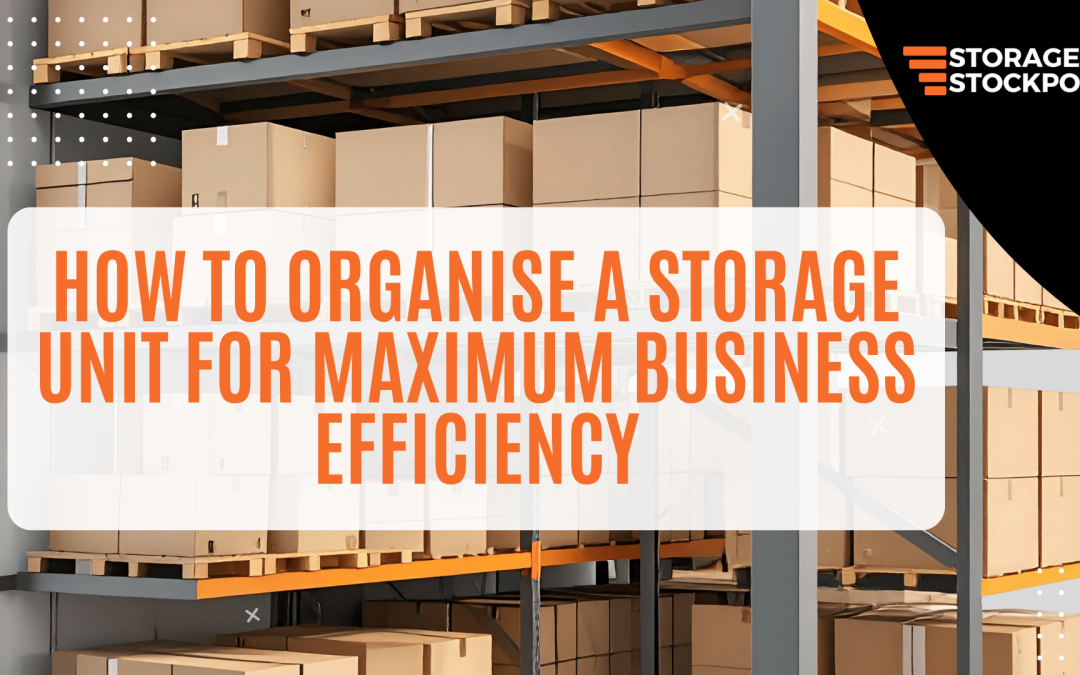
If you need to know How to Organise a Storage Unit for business use, the goal is not just fitting everything inside. It is creating a space that saves time, protects stock and equipment, and makes daily retrieval easy enough to support the way your business actually works.
A well-organised unit can speed up picking, loading, stock checks and returns handling. A badly organised one does the opposite. It turns simple jobs into repeated reshuffling, missed items and wasted time every time you open the door.
What this guide covers
- Storage layout planning
- Racking and stacking priorities
- Labelling and inventory control
- Access planning for faster retrieval
- Common organisation mistakes
Start with a layout that matches how your business works
The best way to organise a unit depends on what your business stores and how often you need to access it. A retailer picking orders every day needs a different setup from a tradesperson storing spare materials, and both need a different setup from a company archiving records. Before you move anything in, decide what the unit is meant to do for the business.
Think about the flow of activity rather than the amount of space alone. Which items move in and out most often. Which items are backup stock or lower-priority equipment. Which boxes will stay untouched for weeks, and which need to be within arm’s reach. Once you know that, the layout becomes much easier to plan properly.
Create clear working zones
Most business units work better when divided into simple zones. One zone can be for fast-moving stock, one for reserve stock, one for packaging or tools and one for archive or low-use items. That basic structure keeps the unit from turning into one mixed wall of boxes.
These zones do not need formal partitions. They just need to be consistent. If everyone using the unit knows where active stock belongs and where long-term storage begins, retrieval becomes much faster and mistakes become less common.
Keep a central access path
One of the easiest ways to ruin an otherwise good setup is to fill every inch of floor space. Leave a walkway through the unit so you can reach the back without unpacking half the front. That one decision often makes the difference between a workable business unit and a frustrating one.
If you are still deciding what size you need, the storage size estimator can help you choose a unit with enough room for access as well as storage capacity.
How to Organise a Storage Unit with racking and safe stacking
Racking is often the biggest upgrade for business efficiency because it turns floor space into usable storage space without burying everything in heavy stacks. Shelves make smaller items easier to sort, count and retrieve. They also help you separate categories instead of relying on stacked boxes that need constant moving.
Not every unit needs full racking, but most business users benefit from some kind of shelf-based system. It works particularly well for boxed stock, packaging supplies, smaller tools, spare fittings and archived files. The aim is to reduce the number of times you have to move one item just to get to another.
Store by weight and frequency
Heavy items should go low down. Lighter items can go higher. Frequently used stock should sit between waist and shoulder height wherever possible because that is the easiest and quickest area to work from. Slower-moving items can go higher up or deeper into the unit.
This sounds basic, but it improves efficiency immediately. Staff or business owners spend less time bending, lifting and re-stacking, and the space feels easier to work with from the start.
Use sturdy containers, not mixed loose piles
Boxes, lidded tubs and clearly defined product cartons work far better than loose bags or mixed piles of materials. Consistent containers are easier to label, easier to stack and much easier to count. They also help protect items from dust, crushing and general handling damage.
- Heavy stock and tools at floor level
- Fast-moving items in the easiest reach zone
- Reserve stock on upper shelves or towards the back
- Fragile items away from dense or bulky equipment
- Loose parts kept in labelled bins or lidded boxes
Make labels and inventory control part of the setup
A business storage unit is only efficient if you can tell what is in it without opening everything. Labelling is what turns storage space into a working system. It should be obvious what is in each box, what category it belongs to and whether it is active, reserve, return stock or archive material.
If you are trying to work out How to Organise a Storage Unit for maximum business efficiency, this is the point where many businesses fall short. They label just enough to recognise things visually, but not enough to retrieve items quickly or delegate access confidently.
Label by category and code
A good label should tell you more than the room it came from or the person who packed it. Use category names, stock references, date ranges or product codes that make sense for the business. For example, packaging medium cartons is better than supplies, and 2025 invoices Q1 is better than office files.
Where possible, pair physical labels with a simple digital list. A spreadsheet showing box number, contents and location inside the unit is often enough. You do not need a complex system to get real benefits from better tracking.
Review labels as the business changes
Storage systems drift over time if nobody updates them. Product lines change, new stock arrives and old categories stop making sense. Build a quick review into your routine so the labels still match what is actually inside the unit.
This also helps when more than one person uses the space. A clear, current labelling system reduces the chance of mispicks, missing stock and duplicated orders.
Plan access around the busiest parts of your week
The most efficient units are organised around real usage, not ideal usage. Think about when you most often visit the unit and what you usually need first. A tradesperson loading for early jobs needs fast access to different things than an online retailer doing a weekly stock count or a market trader preparing for Saturday.
That is why How to Organise a Storage Unit should always be linked to actual business routine. If the items you need most often are trapped behind low-priority boxes, the unit is working against you rather than for you.
Keep priority items near the entrance
Fast-moving stock, everyday tools, core packaging and current project materials should sit closest to the door. Reserve stock, archived items and seasonal equipment can sit deeper in the unit. This creates a natural front-to-back hierarchy that supports faster retrieval.
If your stock levels or storage needs change regularly, it helps to compare current storage prices and keep a close eye on when it might make sense to adjust unit size rather than overfilling the one you already have.
Set up a loading and returns area
If your business handles orders, deliveries or job-based materials, leave a small staging area near the front. This can be used for outgoing stock, returned items, short-term overflow or next-day loading. It stops the entire unit from becoming one continuous stack and gives you a controlled place for items that are in motion.
This is especially useful for businesses using a unit as a practical operating base. If flexibility matters while you are scaling or reorganising, options such as no deposit storage or introductory storage offers from £1 can help you get set up without too much pressure at the start.
Common mistakes that reduce business efficiency
The first mistake is filling the unit before you design the layout. Once everything is already inside, it is harder to create sensible zones or access routes. The second mistake is assuming you will remember where everything is without a written system. That might work for a week, but it rarely works as the business grows.
Another common problem is mixing item types without clear separation. Stock, tools, archive boxes, returns and packaging should not all live in the same stack. That leads to damage, slower retrieval and repeated reorganisation that wastes time every week.
The final mistake is forgetting the practical terms around access and usage. Before you commit, read the self storage FAQs so you understand how the storage arrangement fits your day-to-day business routine.
Related guides
- Compare storage prices before choosing your unit size
- See flexible storage options with no deposit
- Review introductory storage offers from £1
- Estimate the right size for stock, tools or archive boxes
Frequently Asked Questions
What is the best way to organise a business storage unit?
The best approach is to divide the unit into clear zones based on how often items are used. Fast-moving stock and priority equipment should stay near the front, while archive or reserve items can go further back.
Should I use shelves in a business storage unit?
In most cases, yes. Shelves make it easier to separate categories, reduce overstacking and improve access to smaller items such as boxes, tools, parts and packaging supplies.
How do you label a storage unit efficiently?
Use clear category names, stock references or date ranges rather than vague descriptions. A simple digital list linked to box or shelf locations also makes retrieval much easier.
How much access space should I leave in a unit?
Leave enough room to walk through the unit and reach the back without unpacking everything in front. That access path is one of the most important parts of an efficient setup.
What is the biggest mistake when organising a storage unit?
The biggest mistake is treating the unit like a dumping ground instead of a working system. Once stock and boxes go in without zones, labels or access planning, efficiency drops quickly.
A well-organised unit should save time every week, not create another task to manage. If you want a storage setup that supports stock control, retrieval and smoother daily operations, storagemanchester.co.uk can help you choose a space that works properly for your business. Explore the options for business storage in Stockport and build a unit layout that supports real efficiency.
Recent Comments